-

Why Japanese Avoid Saying “Otoko(男)” and “Onna(女)” (They Can Sound Rude) for N5/Beginner|Podcast Companion
In Japanese, “otoko” and “onna” are not wrong, but they can sound rude or harsh. Learn when to avoid them and what to say instead. -
3 Basic Japanese Greetings Explained (Ohayou, Konnichiwa, Konbanwa) for N5/Beginner|Podcast Companion
Learn the 3 basic Japanese greetings: Ohayou, Konnichiwa, and Konbanwa. Easy explanations for beginners with usage, pronunciation, and cultural tips. Perfect with the WWN podcast. -
100 School and Study Vocabulary Explained in Easy Japanese (N5/Beginner) Podcast Companion
Learn 100 Japanese words about school and study. This lesson note works with the podcast. Listen on Spotify, Apple Podcasts, or YouTube while you read. -
69 People, Family, and Occupations Vocabulary Explained in Easy Japanese (N5) Podcast Companion
Learn 70 Japanese vocabulary words about people, family, and occupations for JLPT N5. Easy Japanese explanations with a podcast for listening and pronunciation practice. -
Momotaro(ももたろう) Japanese Folktale Explained in Easy Japanese (N4–N3) Podcast Companion
Read the full Momotaro story in easy Japanese for JLPT N4–N3 learners. This lesson note includes vocabulary, quiz questions, and cultural explanations. Use it together with the podcast episode. -
Why “Gogo 10-ji(午後10時)” Sounds Strange in Japanese | Natural Japanese Time Expressions (N5–N4) Podcast Companion
Do you say 「午後10時」 for 10 PM? It is grammatically correct, but it sounds strange. Discover why native speakers prefer 「夜10時」 and how Japanese time expressions really work. -
Why Japanese Learners Should Be Careful with 「Anata(あなた/貴方)」 (N5–N4) Podcast Companion
Japanese people almost never use 「あなた」 to address the person in front of them. In this article, we will look at the history and meaning of 「あなた」 and explain why modern Japanese speakers usually avoid it. -
Japanese Sentence Connectors(接続助詞) Explained by Function (A Complete Guide from Beginner to Advanced)
What are Japanese sentence connectors (接続助詞)? Japanese sentence connectors (接続助詞) are a part of speech you need to speak fluently in Japanese. They are used to connect one sentence to another. If you only speak in short, separate... -
Japanese Prefixes for Beginners: How Prefixes(接頭辞) Change Meaning and Nuance (N5–N4)
Japanese prefixes (接頭辞) don’t change grammar — they change nuance. This N5–N4 guide explains what prefixes really are, how お〜 / ご〜, 大〜 / 小〜, and 超〜 work, and why some words that look like prefixes are not treated as such in real Japanese. -
How Long Can You Still Say “明けましておめでとう”? Timing, Variations, and Social Context in Japanese (N5-N4)
There is no fixed deadline for saying “明けましておめでとう.” For N5–N4 learners, this article explains how long Japanese people actually use New Year greetings, how timing and relationships matter more than dates, and how to choose natural expressions from casual to formal. -
〜にくい vs 〜づらい: Why Japanese Has Two “Hard to Do” Expressions
Japanese has two expressions for “hard to do”: にくい and づらい. This article takes a deeper look at how they differ in meaning, emotion, and grammatical stability — and why each sounds natural (or unnatural) in different contexts. -
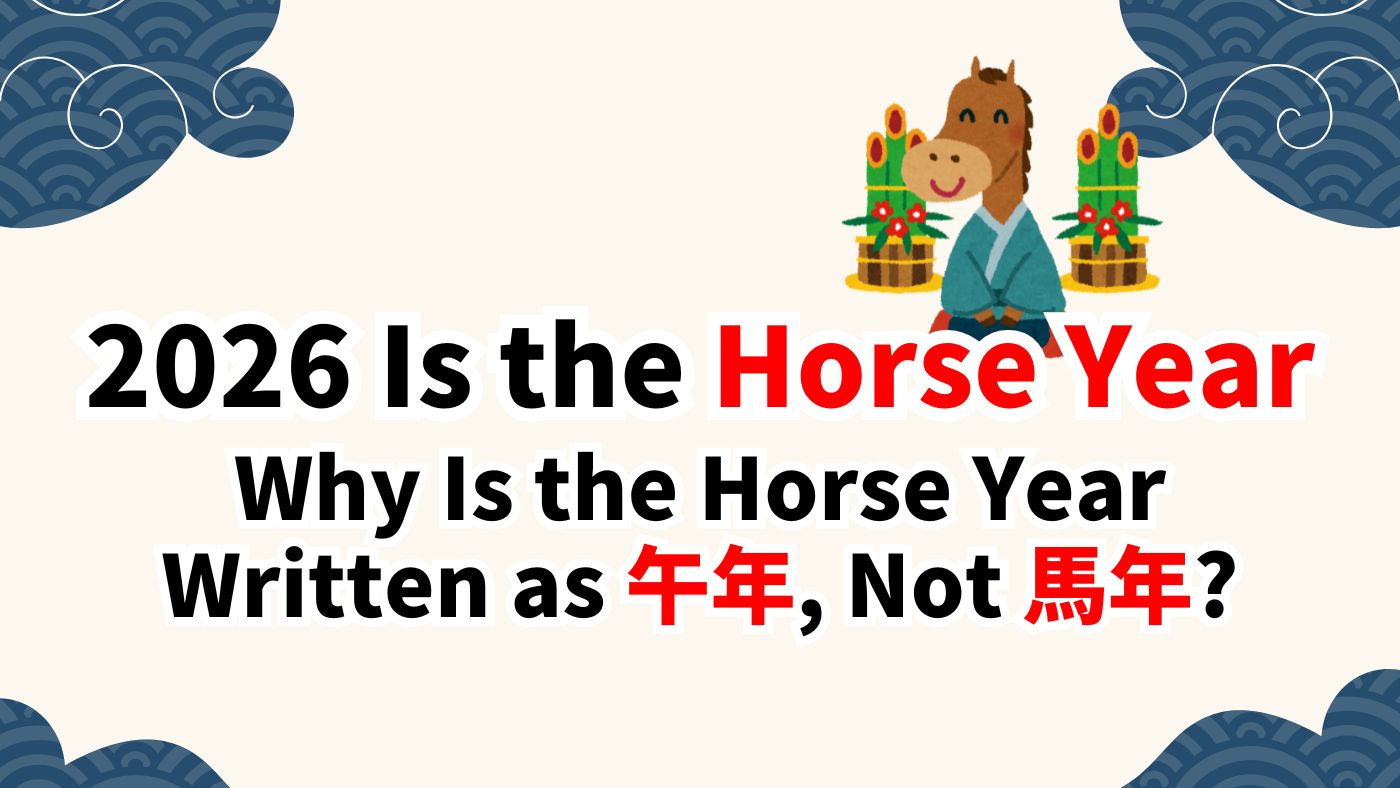
2026 Is the Horse Year! But Why Is the Horse Year Written as 午年, Not 馬年?
2026 is the Year of the Horse—but why is it written as 午年, not 馬年? This article explains the Japanese zodiac (干支, eto), the meaning of 午, and how the zodiac system survived as culture rather than fortune-telling. -
What Is the Difference Between は and が? Understandable, Attitude, and Style in Japanese (Level 6)
At Level 6, は and が are no longer about rules or correctness. They show the speaker’s intent, attitude, and distance from emotion. This article explores how particle choice becomes a personal decision in Japanese. -
What Is the Difference Between は and が? Context and Focus in Japanese (Level 5)
Learn how は and が work across sentences in Japanese (Level 5). This article explains how context and focus shape particle choice in real conversations with natural examples and explanations. -
What Is the Difference Between は and が? Contrast and Emphasis in Japanese (Level 4)
At Level 4 (N2), は and が are no longer just about new or known information. Learn how they express contrast, generalization, limitation, and emphasis—and what speakers really mean behind the sentence. -
How to Form Negative Sentences in Japanese② Verbs (Group 1, 2, and 3)Beginner Guide
A beginner-friendly guide to Japanese verb negatives. Learn how to form negative verbs by Group 3, 2, and 1, and how to use them naturally in sentences with から / ので / が / けど.
Learn Japanese Online with a Native Otaku Teacher — Grammar, Expressions, and Nuance